You are being redirected to our new website!
Click here for the new Lead vs Copper foil page!
Lead vs Copper foil - What's the difference?
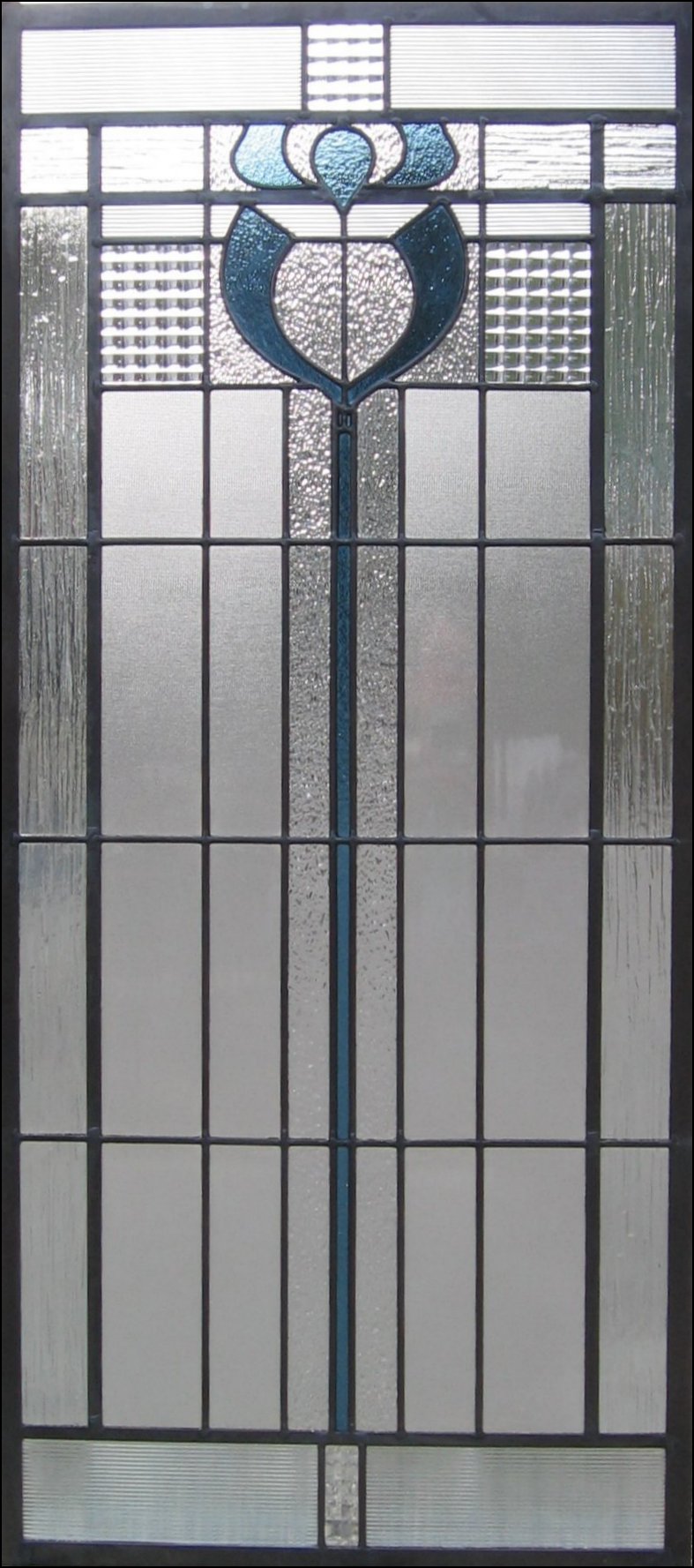 |
The traditional method for making stained glass uses lead came, long strips of lead shaped into an H or a U (for outside borders). The edges of the glass pieces fit into the channels in the lead, and the joints between the strips of came are soldered together.
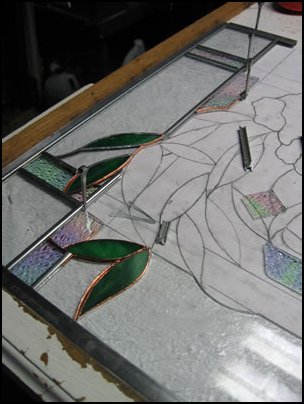
In the 19th century the copper foil technique was developed as an alternative to lead came to allow the construction of three-dimensional glass objects like lampshades, but it can also be used in windows. Copper foil works better for intricate designs with small pieces, because the technique makes finer lines between the pieces -- you don't have the edges of the lead overlapping the glass. Copper foil is also best for irregularly shaped pieces, whereas geometric shapes are better suited to lead.
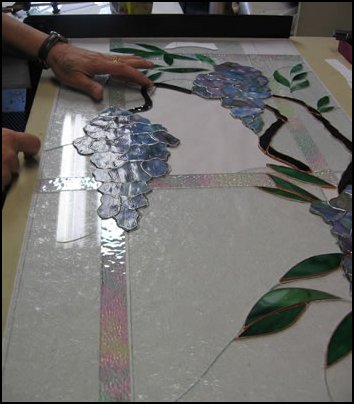
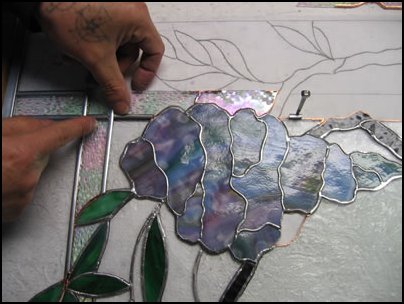
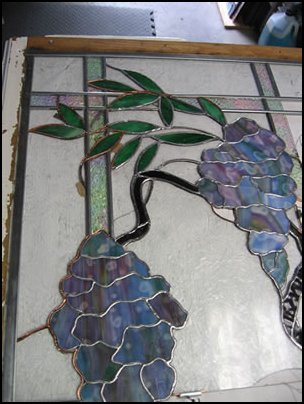
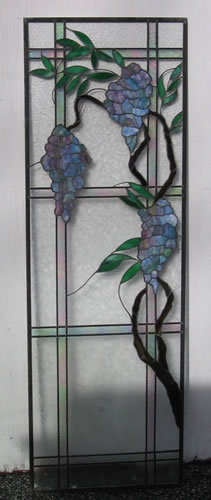
The wisteria window depicted right and below utilizes both lead and copper foil technique. The flower clusters, leaves and stems are copper foil; the lattice and background are leaded.
|
 |
Why is a copper foil window more expensive?
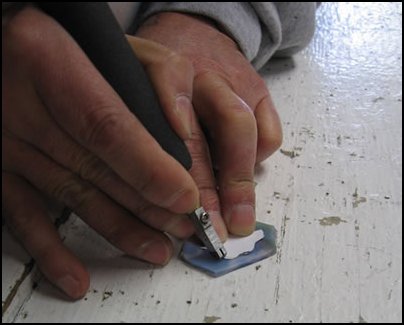 |
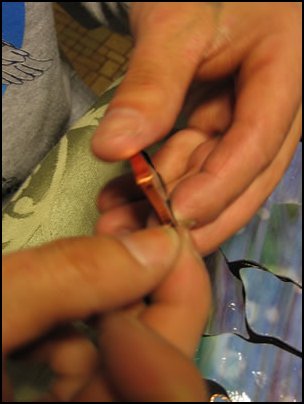
The copper foil technique is much more labor-intensive. Each piece is cut, then ground if necessary for an exact fit. Then the edge of each piece is wrapped in copper foil tape. The edges of the copper tape are smoothed down over the faces of the glass with a razor blade and trimmed if necessary so the solder line will be as fine as possible. When all the pieces have been wrapped and the fit has been verified, the window is soldered front and back. |

|
Go back
|